How Many Cups Are in a Pound of Dog Food?
Contents
- How to Calculate the Number of Cups in a Bag of Dog Food
- Why the Number of Cups in a Bag of Dog Food Matters
- Feeding Guidelines
- Prevent Overfeeding or Underfeeding
- Cost Management
- Dietary Adjustments
- Prevent Food Spoilage
- Monitoring Your Pet’s Health
- Conclusion
- FAQs
- What else can you use to measure dry dog food apart from cups?
- How many pounds are 4 cups of dog food?
- Is 200g of food enough for a dog?
- Sources
Generally, a pound of dry dog food holds roughly 4 cups. That is only a rule of thumb, though, not a standard measure across brands. Additionally, wet dog food isn’t measured the same way as dry food.
The density and size of the kibble also vary. As such, it’s easier to know exactly how many cups are in a bag when you have a formula. You can use it to calculate the quantity for a specific dog food brand.
Below are tips on measuring how many cups are in a pound of dog food:
How to Calculate the Number of Cups in a Bag of Dog Food
First, look for the manufacturer’s label for information about the quantity in product weight, count, and liquid measure. If the bag weight is in kilograms, convert it to pounds. There are approximately 2.20462 pounds in 1 kilogram. So, multiply the weight in kilograms by this conversion factor to get the weight in pounds.
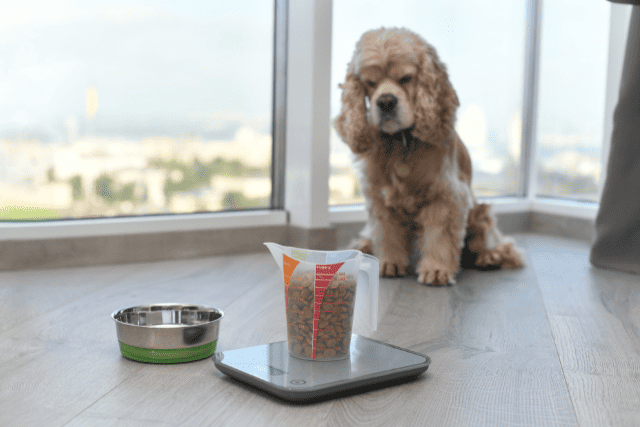
Next, it’s time to know how many cups are in a pound of dog food. This formula makes the process easy.
Number of Cups = Bag Weight (in ounces) / Weight of one cup of kibble (in ounces)
For example, let’s say you have a 40-pound bag of dry dog food and want to calculate the number of cups in it.
One pound = 16 ounces. A standard measuring cup measures volume, and a level cup of typical kibble weighs roughly 4 ounces. Dense kibble weighs more per cup, and light, airy kibble weighs less.
Number of Cups = 40 pounds (640 ounces) / ounces per cup (4) = 160 cups
For a more exact number, check the calorie statement on the bag. Most labels list calories per cup (kcal/cup) and per kilogram (kcal/kg). Divide the kcal/kg figure by 2.2 to get calories per pound, then divide that by the kcal per cup.
Estimate how many cups of dog food are in different-sized bags with this formula. The following are some estimates:
- In a 10-pound bag of dry food, there are 160 ounces, meaning when you divide this number by four ounces per cup, you get about 40 cups per bag.
- A 30-pound bag has approximately 480 ounces. Hence, it gives you about 120 cups of dry dog food.
- If you’ve bought a 20-pound bag, it has about 320 ounces of dry food, which you can fill about 80 cups.
Why the Number of Cups in a Bag of Dog Food Matters
So, why should you know how many cups are in your pet’s favorite dog food brand? As a dog owner, knowing the number of cups in a bag of dog food is beneficial for the following reasons:
Feeding Guidelines
Dog food bags typically provide feeding guidelines based on your pet’s size, age, and activity level. The AKC notes these are a starting point, and they can run larger than your dog needs. These guidelines are usually in terms of cups of food to give it per day. Consequently, knowing how many cups of dog food are in the bag helps you accurately follow these guidelines to ensure your pet receives the right amount of food.
Prevent Overfeeding or Underfeeding
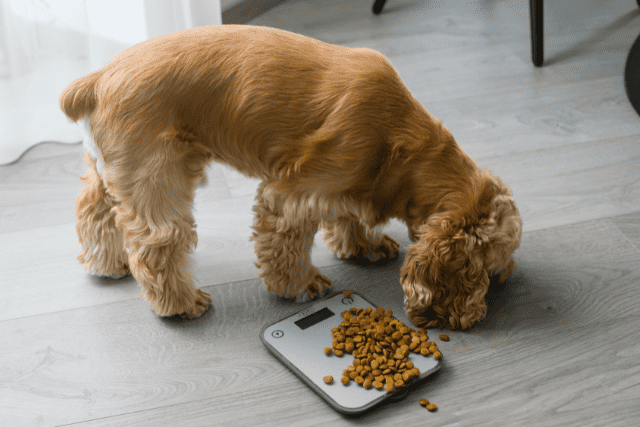
Too much or too little food will affect your pet’s health adversely. For instance, overfeeding can lead to obesity, a problem associated with various issues, including joint problems, diabetes, and heart disease. Underfeeding, on the other hand, can lead to malnutrition and other health concerns.
Therefore, when you know what’s in the bag, you create your pet’s meal plan with its health in mind. Feeding becomes a loving act, measuring out food instead of piling up the bowl or putting too little for your pet’s satisfaction.
Cost Management
Cost is also a concern because if you can’t control your spending on dog foods, you might run out of supplies and leave your pet hungry. Therefore, when you know how many cups of dog food are in a bag, you can budget for your pet’s food expenses and plan accordingly. You also learn how to differentiate brands with the same food content based on the quantity they offer.
Dietary Adjustments
Sometimes, you may need to make dietary adjustments for your dog, such as switching to a different brand or type of food or modifying their portion size when they change their activity level or age. When you know how many cups of dog food come in a bag, it’s easier to transition your dog to a new food or adjust their daily intake as needed.
Prevent Food Spoilage
If you have a small dog that requires a relatively small amount of dry food, knowing how many cups of dog food a bag has helps you avoid buying large bags of food that may spoil before your pet consumes it all. Further, it ensures you don’t feed your pet leftovers to avoid wastage because you bought less food.
Monitoring Your Pet’s Health
If your pet has specific dietary requirements or health issues, knowing how many cups of dog food are in a bag helps you keep track of your dog’s diet accurately. It’s crucial, especially when a veterinarian is tracking the progress your pet is making.
Conclusion
When you know how much food a bag contains, whether wet or dry dog food, you can provide your pet with the right amount of food to maintain its health.
Additionally, you can manage your budget effectively. There’ll be no food wastage, and you’ll lay out a perfect meal plan for your pet. It may sound like there’s a lot of work involved. However, on the contrary, when you know the ounces per cup of dry food, you can calculate how much food is in any sized bag.
FAQs
What else can you use to measure dry dog food apart from cups?
Besides using cups, you can measure dry dog food using a kitchen scale in grams or ounces. Weighing is more accurate than scooping, because the amount in a cup changes with how you fill it. A measuring spoon can help for very small amounts.
How many pounds are 4 cups of dog food?
The weight of 4 cups of dog food can vary depending on the type and brand, as different foods have different densities. As a rough guide, four cups of dry dog food weighs around 1 pound, though dense kibble can weigh more.
Is 200g of food enough for a dog?
It depends on the dog’s size, age, breed, and activity level. For some small or less active dogs, 200g of dog food per day may be sufficient, while large or more active dogs may require a significantly larger amount to meet their nutritional needs.
Sources
- How to Read a Dog Food Label, American Kennel Club
- How Much Should I Feed My Dog?, American Kennel Club